Inbox27.com

Bitcoin and Altcoin news

Tag Archive : Bitcoin

Navigating Hedge Fund Games with Your Bitcoin

Spotting Hedge Funds Playing with Bitcoin’s Price

 How to Spot Hedge Fund Shenanigans

Sneaky Tactics Hedge Funds

Hey Crypto Crew! Let’s dive into the wild world of Bitcoin and spill the beans on how some big-shot hedge funds might be messing with its price. Buckle up as we spill the tea on who’s behind it, how they pull it off, and most importantly, how you can keep your precious Bitcoin safe from their shenanigans.

Read More

Bitcoin vs Gold

Investing in Bitcoin vs Gold: A Comparative Analysis

Bitcoin vs Gold

Bitcoin vs Gold

Investing in Bitcoin vs Gold: A Comparative Analysis

Bitcoin and gold are two popular assets that investors often consider as alternatives to fiat currencies. Both have some advantages and disadvantages over traditional money, but which one is a better investment option? In this blog post, we will compare and contrast Bitcoin and gold based on four criteria: scarcity, durability, portability, and divisibility.

Scarcity refers to the limited supply of an asset, which affects its value and demand. Bitcoin has a fixed supply of 21 million coins, which will be reached around the year 2140. Gold, on the other hand, has an unknown supply, but it is estimated that there are about 190,000 tons of gold in the world, of which about 170,000 tons have been mined. Therefore, both Bitcoin and gold are scarce assets, but Bitcoin has a more predictable and transparent supply.

Durability means the ability of an asset to withstand wear and tear, damage, or decay. Bitcoin is a digital asset that exists on a decentralized network of computers, which makes it immune to physical deterioration or destruction. Gold is a physical asset that can last for thousands of years without corroding or losing its luster. However, gold can be stolen, confiscated, or damaged by natural disasters or human errors. Therefore, both Bitcoin and gold are durable assets, but Bitcoin has a higher degree of security and resilience.

Portability means the ease of transferring an asset from one place to another or from one person to another. Bitcoin is a highly portable asset that can be sent and received across the world in minutes with minimal fees and intermediaries. Gold is a less portable asset that requires physical transportation, storage, and verification, which can incur high costs and risks. Therefore, Bitcoin has a clear advantage over gold in terms of portability.

Divisibility means the ability of an asset to be divided into smaller units without losing its value or utility. Bitcoin is a highly divisible asset that can be split into 100 million units called Satoshis, which can facilitate microtransactions and increase liquidity. Gold is a less divisible asset that can be divided into grams or ounces, but not without losing some value or utility due to transaction costs or purity issues. Therefore, Bitcoin has a clear advantage over gold in terms of divisibility.

In conclusion, based on the four criteria of scarcity, durability, portability, and divisibility, Bitcoin seems to be a superior asset to gold for investors who seek an alternative to fiat currencies. However, this does not mean that gold is obsolete or worthless. Gold still has some benefits over Bitcoin, such as its historical reputation, its physical tangibility, and its lower volatility. Moreover, both Bitcoin and gold have some challenges and risks that investors should be aware of, such as regulatory uncertainty, environmental impact, cyberattacks, or market manipulation. Therefore, investors should do their own research and due diligence before investing in either asset.

Crypto Bull Market

How to Identify a Crypto Bull Market: 7 Key Indicators

Introduction

A crypto bull market is a period of sustained upward price movement in the cryptocurrency market. Bull markets can last for months or even years, and they can be very lucrative for investors. However, it is important to be able to identify a bull market before it starts in order to maximize your profits.

In this blog post, we will discuss seven key indicators that can help you identify a crypto bull market. We will also provide some tips on how to make the most of a bull market.

Read More

Crypto DCA: The Math Behind a Simple but Effective Investment Strategy

Dollar Cost Averaging (DCA): How to Reduce Your Risk and Improve Your Returns in Crypto

The math behind dollar cost averaging (DCA) is relatively simple. It is based on the idea of buying a fixed dollar amount of an asset at regular intervals, regardless of the price. This can help to smooth out the volatility of the asset over time and reduce the overall cost basis.

To calculate the average purchase price of an asset using DCA, simply add up the total amount invested and divide by the number of purchases. For example, if you invest $100 per month in Bitcoin for 12 months, your average purchase price would be:

Average purchase price = $100/month * 12 months = $1200

If you then sell all of your Bitcoin for $1500, you would have made a profit of $300 ($1500 – $1200).

DCA can be used to invest in any asset, but it is particularly popular for cryptocurrencies, which are known for their volatility. By investing a fixed amount of money at regular intervals, you can reduce the risk of buying at a peak and selling at a trough.

Here is an example of how DCA can work in practice:

  • Month 1: You invest $100 in Bitcoin, and the price is $10,000. You now own 0.01 Bitcoin.
  • Month 2: You invest another $100 in Bitcoin, but the price has dropped to $5,000. You now own 0.02 Bitcoin.
  • Month 3: You invest another $100 in Bitcoin, and the price has risen back to $10,000. You now own 0.03 Bitcoin.

Over the three months, you have invested a total of $300 and own 0.03 Bitcoin. Your average purchase price is $10,000 per Bitcoin.

If you sell all of your Bitcoin at the end of the three months for $15,000, you would have made a profit of $1500 ($4500 – $3000).

Of course, there is no guarantee that DCA will always be profitable. If the price of the asset you are investing in continues to fall, you will still lose money. However, DCA can help to reduce your risk and improve your overall returns over time.

Here are some additional things to keep in mind when using DCA:

  • Investment period: The longer you invest using DCA, the more likely you are to see positive returns. This is because you will be averaging out the price of the asset over a longer period of time.
  • Investment amount: The amount of money you invest per interval is also important. If you can only invest a small amount each time, it will take you longer to see significant returns. However, even a small investment can add up over time.
  • Rebalancing: It is important to rebalance your portfolio periodically to ensure that it still meets your investment goals. This may involve selling some of your winners and buying more of your losers.

DCA is a simple but effective investment strategy that can help you to reduce your risk and improve your overall returns over time.

The Dollar-Cost Averaging Strategy for Cryptocurrency Investing

Dollar-cost averaging (DCA) is a long-term investment strategy in which you invest a fixed amount of money in a particular asset at regular intervals, regardless of the price. This helps to smooth out the overall cost of your investment, as you are buying more of the asset when it is lower and less when it is higher.

To apply DCA when investing in cryptocurrency, you would first need to decide how much money you want to invest and how often you want to make purchases. For example, you could decide to invest $100 every week or $500 every month. Once you have decided on your investment amount and frequency, you would need to choose a cryptocurrency exchange or broker that allows you to set up recurring purchases.

Read More

The Pros and Cons of Long-Term Bitcoin Investment

Bitcoin

Bitcoin

Whether or not holding Bitcoin long-term is statistically more profitable is a complex question with no easy answer. There are a number of factors to consider, including the volatility of Bitcoin’s price, the overall state of the economy, and the risk tolerance of the investor.

Historically, Bitcoin has been a very volatile asset. In its short history, it has experienced periods of rapid growth as well as periods of sharp decline. This volatility means that there is a high risk of losing money if you invest in Bitcoin.

However, Bitcoin has also shown a tendency to appreciate in value over the long term. Since its creation in 2009, the price of Bitcoin has increased by over 100,000%. This means that investors who bought Bitcoin early and held it for the long term have made a lot of money.

The overall state of the economy can also affect the profitability of Bitcoin. During times of economic uncertainty, investors may be more likely to turn to Bitcoin as a hedge against inflation. This can drive up the price of Bitcoin and make it more profitable for investors.

Finally, the risk tolerance of the investor is also an important factor to consider. Bitcoin is a high-risk asset, and only investors who are comfortable with the possibility of losing money should invest in it.

Overall, whether or not holding Bitcoin long-term is statistically more profitable is a decision that each investor must make for themselves. There is no guarantee that Bitcoin will continue to appreciate in value over the long term, and there is a high risk of losing money if you invest in it. However, the potential rewards could be significant for investors who are willing to take on the risk.

Here are some additional things to consider when thinking about the profitability of long-term Bitcoin investment:

The supply of Bitcoin is limited. There will only ever be 21 million Bitcoins created. This scarcity could drive up the price of Bitcoin in the long term.

Bitcoin is a decentralized currency. It is not subject to government control or inflation. This makes it an attractive asset for investors who are looking for a hedge against inflation.

Bitcoin is a global currency. It can be used to send and receive money anywhere in the world without the need for a bank or other financial institution. This makes it a convenient and efficient way to transfer money.

Of course, there are also some risks associated with long-term Bitcoin investment. These risks include:

  • Bitcoin is a volatile asset. The price of Bitcoin can fluctuate wildly, and there is a risk of losing money if you invest in it.
  • Bitcoin is a new and untested technology. There is no guarantee that it will continue to be successful in the long term.
  • Bitcoin is not regulated by any government. This means that there is no protection for investors if something goes wrong.
  • Overall, whether or not long-term Bitcoin investment is a good idea for you depends on your individual circumstances and risk tolerance. If you are comfortable with the risks involved and believe in the long-term potential of Bitcoin, then it could be a good investment for you.

What Makes Bitcoin Valuable?

Bitcoin is valuable for a number of reasons, including:

Scarcity: There will only ever be 21 million Bitcoins created. This scarcity, combined with the fact that Bitcoin is a decentralized currency not subject to government control, makes it an attractive asset for investors who are looking for a hedge against inflation.

Divisibility: Bitcoin can be divided into smaller units, called Satoshi’s. This makes it a convenient and efficient way to transfer money.
Security: Bitcoin transactions are secured by cryptography. This means that they are very difficult to counterfeit or hack.

Acceptance: Bitcoin is increasingly accepted as a payment method by businesses around the world. This makes it more valuable as a currency.

Durability: Bitcoin is stored in a digital ledger called the blockchain. This ledger is distributed across a network of computers, making it very difficult to tamper with.

Transparency: All Bitcoin transactions are recorded on the blockchain. This makes it a very transparent currency.
These are just some of the reasons why Bitcoin is valuable. As the technology continues to develop and more businesses accept Bitcoin as a payment method, its value is likely to continue to grow.

Here are some additional thoughts on the value of Bitcoin:

Bitcoin is a store of value. This means that it can be used to store wealth over time.
Bitcoin is a unit of account. This means that it can be used to measure the value of goods and services.
Bitcoin is a medium of exchange. This means that it can be used to buy and sell goods and services.
Bitcoin is still a relatively new asset, and its value is volatile. However, it has the potential to revolutionize the way we think about money.

Why are people moving away from Fiat and Gold?
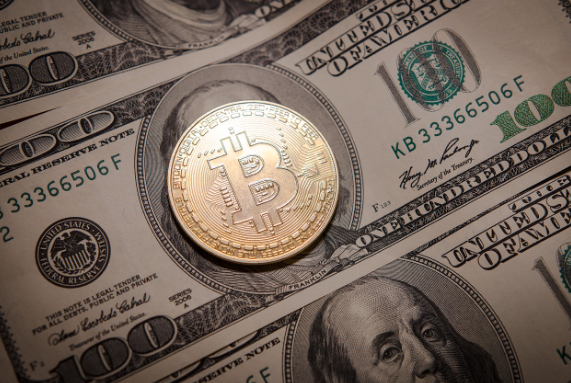
Bitcoin vs Fiat

Bitcoin vs Fiat

Bitcoin is valuable for a number of reasons, including:

Scarcity: There will only ever be 21 million Bitcoins created. This scarcity, combined with the fact that Bitcoin is a decentralized currency not subject to government control, makes it an attractive asset for investors who are looking for a hedge against inflation.

Divisibility: Bitcoin can be divided into smaller units, called Satoshi’s. This makes it a convenient and efficient way to transfer money.
Security: Bitcoin transactions are secured by cryptography. This means that they are very difficult to counterfeit or hack.

Acceptance: Bitcoin is increasingly accepted as a payment method by businesses around the world. This makes it more valuable as a currency.
Durability: Bitcoin is stored in a digital ledger called the blockchain. This ledger is distributed across a network of computers, making it very difficult to tamper with.

Transparency: All Bitcoin transactions are recorded on the blockchain. This makes it a very transparent currency.
These are just some of the reasons why Bitcoin is valuable. As the technology continues to develop and more businesses accept Bitcoin as a payment method, its value is likely to continue to grow.

Here are some additional thoughts on the value of Bitcoin:

Bitcoin is a store of value. This means that it can be used to store wealth over time.
Bitcoin is a unit of account. This means that it can be used to measure the value of goods and services.
Bitcoin is a medium of exchange. This means that it can be used to buy and sell goods and services.
Bitcoin is still a relatively new asset, and its value is volatile. However, it has the potential to revolutionize the way we think about money.

Bottom Line:

The bottom line for Bitcoin, blockchain, and the future is that it has the potential to revolutionize the way we think about money.

Bitcoin is a digital currency that is not subject to government control or inflation. It is also a decentralized currency, which means that it is not controlled by any one entity. This makes it a more secure and reliable currency than fiat or gold.

Blockchain is the underlying technology that powers Bitcoin. It is a distributed ledger that records all Bitcoin transactions. This makes it a very transparent and secure system.

As the technology continues to develop and more businesses accept Bitcoin as a payment method, its value is likely to continue to grow. It is possible that Bitcoin could eventually replace fiat or gold as the world’s reserve currency.

Here are some of the potential benefits of Bitcoin and blockchain technology:

Faster and cheaper transactions: Bitcoin transactions are processed on a decentralized network of computers, rather than through a central bank or financial institution. This makes them faster and cheaper than traditional fiat currency transactions.

More secure transactions: Bitcoin transactions are secured by cryptography, which makes them very difficult to counterfeit or hack.
More transparent transactions: All Bitcoin transactions are recorded on the blockchain, which makes them very transparent.
Easier international payments: Bitcoin can be used to make international payments without the need for a third party, such as a bank or financial institution. This can save time and money.

Reduced fraud: Bitcoin transactions are very difficult to counterfeit or hack, which can help to reduce fraud.
More efficient financial markets: Bitcoin can be used to create more efficient financial markets, as it can be used to make secure and fast transactions between buyers and sellers.

Of course, there are also some risks associated with Bitcoin and blockchain technology. These risks include:

Volatility: The price of Bitcoin can fluctuate wildly, and there is a risk of losing money if you invest in it.
New technology: Blockchain is a new technology, and there is no guarantee that it will be successful in the long term.
Regulation: Governments around the world are still trying to figure out how to regulate Bitcoin and blockchain technology. This could stifle innovation in the space.

Overall, the bottom line for Bitcoin and blockchain technology is that it has the potential to revolutionize the way we think about money. However, there are also some risks associated with this technology, and it is important to do your research before investing in Bitcoin or blockchain technology.


Technical Analysis of Bitcoin as of May 26, 2023

Bitcoin Technical Analysis

Bitcoin Technical Analysis

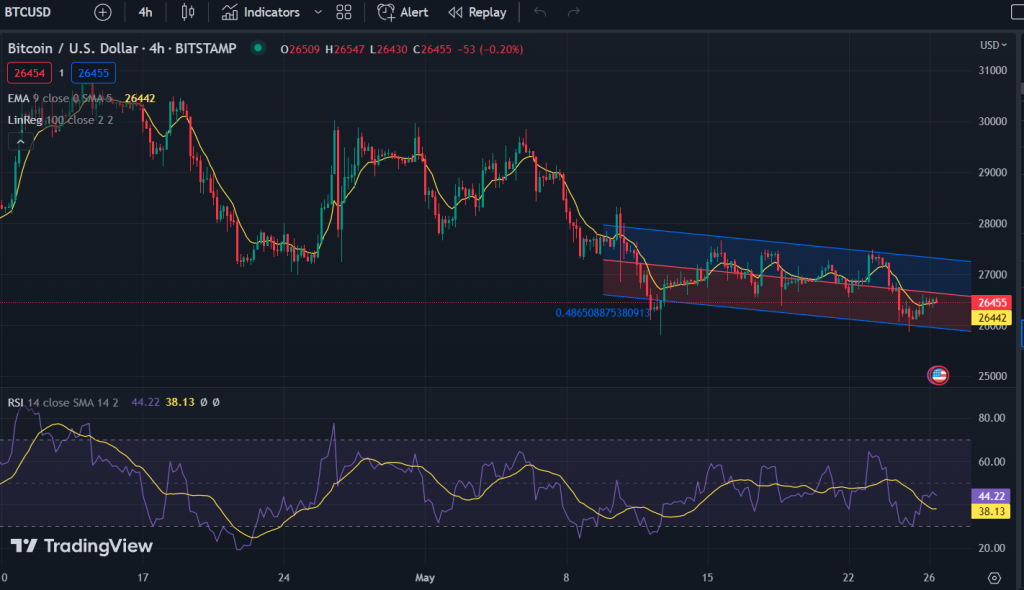
Technical analysis of Bitcoin as of May 26, 2023:

Price:

Bitcoin is currently trading at $26,500. This is a significant drop from its all-time high of $68,789, which it reached in November 2021.

Moving averages: The 50-day moving average is currently at $32,000, and the 200-day moving average is currently at $37,000. This suggests that Bitcoin is still in a downtrend.

Technical indicators: The Relative Strength Index (RSI) is currently at 37, which is below the 50% mark. This suggests that Bitcoin is oversold and could be due for a rebound. However, the MACD indicator is still in a bearish trend, which suggests that the downtrend is still in place.1

Fundamental factors: The recent sell-off in Bitcoin has been driven by a number of factors, including the ongoing war in Ukraine, rising inflation, and the Federal Reserve’s plans to raise interest rates. These factors have created a negative environment for risk assets, including Bitcoin.

Overall, the technical analysis suggests that Bitcoin is still in a downtrend. However, the RSI indicator suggests that Bitcoin could be due for a rebound. The fundamental factors, however, are still negative, which could limit the upside potential.

Read More

How Bitcoin is Challenging Traditional Banking Systems

SVB Bank Collapse

SVB Bank Collapse

Over the past decade, Bitcoin has emerged as an alternative to traditional banking systems. With its decentralized nature, Bitcoin allows users to bypass banks and other financial institutions, which is appealing to people who don’t trust these entities. This mistrust of banks is a key factor driving people to buy Bitcoin.

Read More

Secure Your Crypto Holdings with These Cold Storage Methods

Blockchain

Cold Wallet

As cryptocurrencies continue to gain popularity, it’s crucial for holders to ensure the safety and security of their digital assets. One effective way to achieve this is through cold storage. In this article, we’ll explore what cold storage is and recommend ways to implement it.

Read More

Bitcoin on the Rise: Exploring the Use Cases and Why Investors are Bullish

Bitcoin

Bitcoin

Bitcoin, the world’s largest cryptocurrency by market cap, has been on a bullish trend lately, with its value increasing by 6% this morning. As of writing, the digital asset is worth around $30,150 per unit, and its market cap has surged to a whopping $583 billion. This recent price action is exciting news for cryptocurrency enthusiasts and investors alike, who have been eagerly watching the asset’s movements.

Read More