
Inbox27.com

Bitcoin and Altcoin news

Tag Archive : investing

Bitcoin vs Gold

Investing in Bitcoin vs Gold: A Comparative Analysis

Bitcoin vs Gold

Bitcoin vs Gold

Investing in Bitcoin vs Gold: A Comparative Analysis

Bitcoin and gold are two popular assets that investors often consider as alternatives to fiat currencies. Both have some advantages and disadvantages over traditional money, but which one is a better investment option? In this blog post, we will compare and contrast Bitcoin and gold based on four criteria: scarcity, durability, portability, and divisibility.

Scarcity refers to the limited supply of an asset, which affects its value and demand. Bitcoin has a fixed supply of 21 million coins, which will be reached around the year 2140. Gold, on the other hand, has an unknown supply, but it is estimated that there are about 190,000 tons of gold in the world, of which about 170,000 tons have been mined. Therefore, both Bitcoin and gold are scarce assets, but Bitcoin has a more predictable and transparent supply.

Durability means the ability of an asset to withstand wear and tear, damage, or decay. Bitcoin is a digital asset that exists on a decentralized network of computers, which makes it immune to physical deterioration or destruction. Gold is a physical asset that can last for thousands of years without corroding or losing its luster. However, gold can be stolen, confiscated, or damaged by natural disasters or human errors. Therefore, both Bitcoin and gold are durable assets, but Bitcoin has a higher degree of security and resilience.

Portability means the ease of transferring an asset from one place to another or from one person to another. Bitcoin is a highly portable asset that can be sent and received across the world in minutes with minimal fees and intermediaries. Gold is a less portable asset that requires physical transportation, storage, and verification, which can incur high costs and risks. Therefore, Bitcoin has a clear advantage over gold in terms of portability.

Divisibility means the ability of an asset to be divided into smaller units without losing its value or utility. Bitcoin is a highly divisible asset that can be split into 100 million units called Satoshis, which can facilitate microtransactions and increase liquidity. Gold is a less divisible asset that can be divided into grams or ounces, but not without losing some value or utility due to transaction costs or purity issues. Therefore, Bitcoin has a clear advantage over gold in terms of divisibility.

In conclusion, based on the four criteria of scarcity, durability, portability, and divisibility, Bitcoin seems to be a superior asset to gold for investors who seek an alternative to fiat currencies. However, this does not mean that gold is obsolete or worthless. Gold still has some benefits over Bitcoin, such as its historical reputation, its physical tangibility, and its lower volatility. Moreover, both Bitcoin and gold have some challenges and risks that investors should be aware of, such as regulatory uncertainty, environmental impact, cyberattacks, or market manipulation. Therefore, investors should do their own research and due diligence before investing in either asset.
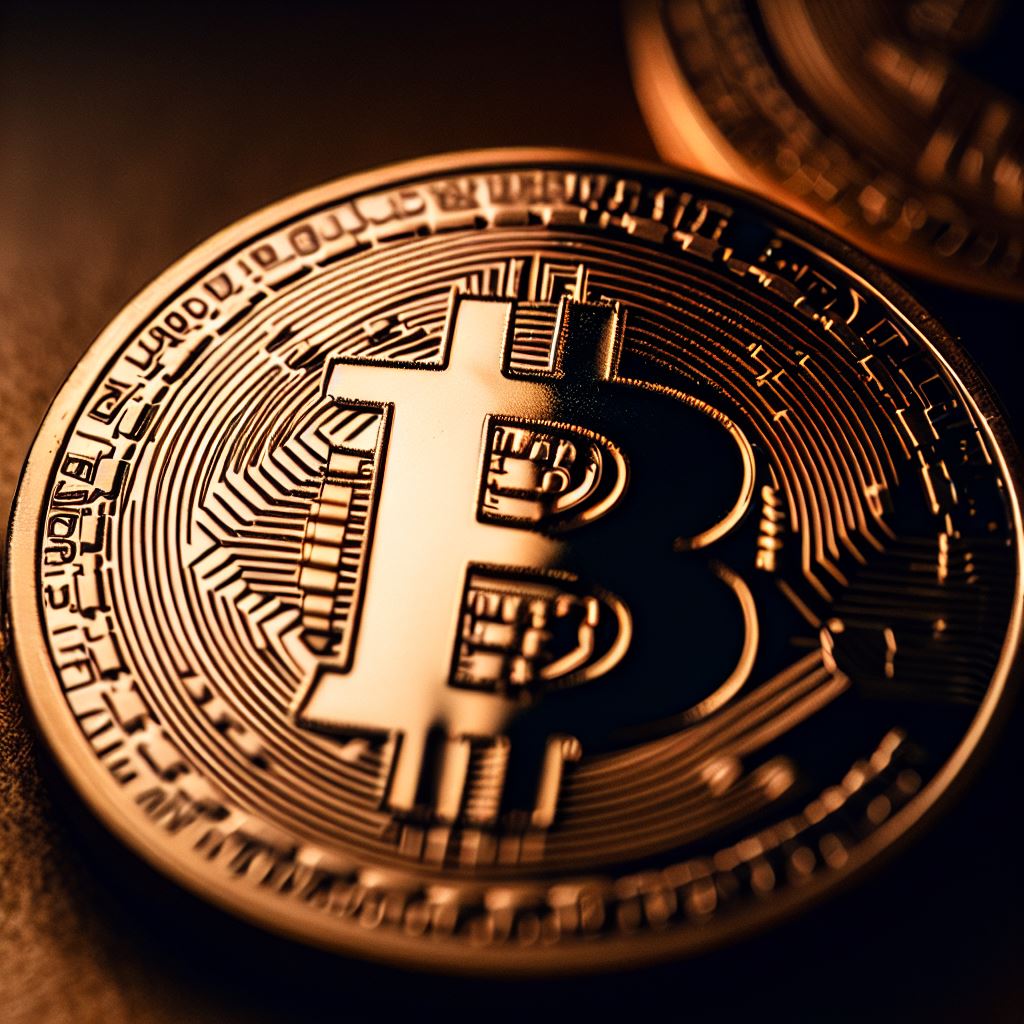
5 Reasons Why Crypto Is a Good Store of Value

 Bitcoin has a fixed supply of 21 million coins

The most well-known cryptocurrency

Cryptocurrency is a digital or virtual token that uses cryptography to secure its transactions and to control the creation of new units. Cryptocurrencies are decentralized, meaning they are not subject to government or financial institution control.

One of the key benefits of cryptocurrency is its potential as a store of value. A store of value is an asset that can be used to store wealth over time. Cryptocurrencies have a number of characteristics that make them well-suited for this purpose, including:

Scarcity: Bitcoin, the most well-known cryptocurrency, has a fixed supply of 21 million coins. This scarcity gives Bitcoin value, as it cannot be inflated by governments or central banks.

Durability: Cryptocurrencies are digital assets that cannot be lost or stolen without the owner’s private key. They are also resistant to counterfeiting.

Portability: Cryptocurrencies can be easily and cheaply transferred anywhere in the world.

In addition to these characteristics, cryptocurrencies are also becoming increasingly accepted by businesses and governments. This growing acceptance makes cryptocurrencies more attractive as a store of value, as they can be more easily used to purchase goods and services.

Read More

Crypto DCA: The Math Behind a Simple but Effective Investment Strategy

Dollar Cost Averaging (DCA): How to Reduce Your Risk and Improve Your Returns in Crypto

The math behind dollar cost averaging (DCA) is relatively simple. It is based on the idea of buying a fixed dollar amount of an asset at regular intervals, regardless of the price. This can help to smooth out the volatility of the asset over time and reduce the overall cost basis.

To calculate the average purchase price of an asset using DCA, simply add up the total amount invested and divide by the number of purchases. For example, if you invest $100 per month in Bitcoin for 12 months, your average purchase price would be:

Average purchase price = $100/month * 12 months = $1200

If you then sell all of your Bitcoin for $1500, you would have made a profit of $300 ($1500 – $1200).

DCA can be used to invest in any asset, but it is particularly popular for cryptocurrencies, which are known for their volatility. By investing a fixed amount of money at regular intervals, you can reduce the risk of buying at a peak and selling at a trough.

Here is an example of how DCA can work in practice:

  • Month 1: You invest $100 in Bitcoin, and the price is $10,000. You now own 0.01 Bitcoin.
  • Month 2: You invest another $100 in Bitcoin, but the price has dropped to $5,000. You now own 0.02 Bitcoin.
  • Month 3: You invest another $100 in Bitcoin, and the price has risen back to $10,000. You now own 0.03 Bitcoin.

Over the three months, you have invested a total of $300 and own 0.03 Bitcoin. Your average purchase price is $10,000 per Bitcoin.

If you sell all of your Bitcoin at the end of the three months for $15,000, you would have made a profit of $1500 ($4500 – $3000).

Of course, there is no guarantee that DCA will always be profitable. If the price of the asset you are investing in continues to fall, you will still lose money. However, DCA can help to reduce your risk and improve your overall returns over time.

Here are some additional things to keep in mind when using DCA:

  • Investment period: The longer you invest using DCA, the more likely you are to see positive returns. This is because you will be averaging out the price of the asset over a longer period of time.
  • Investment amount: The amount of money you invest per interval is also important. If you can only invest a small amount each time, it will take you longer to see significant returns. However, even a small investment can add up over time.
  • Rebalancing: It is important to rebalance your portfolio periodically to ensure that it still meets your investment goals. This may involve selling some of your winners and buying more of your losers.

DCA is a simple but effective investment strategy that can help you to reduce your risk and improve your overall returns over time.

The Dollar-Cost Averaging Strategy for Cryptocurrency Investing

Dollar-cost averaging (DCA) is a long-term investment strategy in which you invest a fixed amount of money in a particular asset at regular intervals, regardless of the price. This helps to smooth out the overall cost of your investment, as you are buying more of the asset when it is lower and less when it is higher.

To apply DCA when investing in cryptocurrency, you would first need to decide how much money you want to invest and how often you want to make purchases. For example, you could decide to invest $100 every week or $500 every month. Once you have decided on your investment amount and frequency, you would need to choose a cryptocurrency exchange or broker that allows you to set up recurring purchases.

Read More

Solana Crypto vs Ethereum

Solana Crypto: The Future of DeFi?

What is Solana?

Solana is a blockchain network that upholds $SOL cryptocurrency. It is known for its fast transactions and low transaction processing costs. Its rival blockchain is Ethereum. Unlike Ethereum, it can handle 3,400 transactions per second while Ethereum can only do 15 transactions per second, making it one of the fastest blockchains in the world. Solana uses POS, which uses hashed timestamps to verify the history of the transactions that occur.

Uses for Solana

If you have a cryptocurrency wallet, Solana is great for sending or receiving money to transfer to exchange for goods and services. Availability for Solana is popular among many people because it is known primarily for its low costs. Examples of what Solana is used for can be for things such as NFT transactions, decentralized finance apps (Runs on P2P blockchain network rather than on one computer), and smart contracts.

Read More

Maximizing Your Investments with Crypto Staking Rewards

Crypto Staking Rewards

Crypto Staking Rewards

In the world of cryptocurrencies, staking has emerged as a popular way to earn passive income by holding and locking up coins in a digital wallet. Staking involves holding a certain amount of a cryptocurrency in a wallet and using it to validate transactions on the network. In exchange for this service, stakers earn rewards in the form of more of the same cryptocurrency. In this article, we’ll explore how staking rewards work and how you can use them to generate income.

Read More